Roulette: Tracing the Wheel’s Journey Through History and Innovation
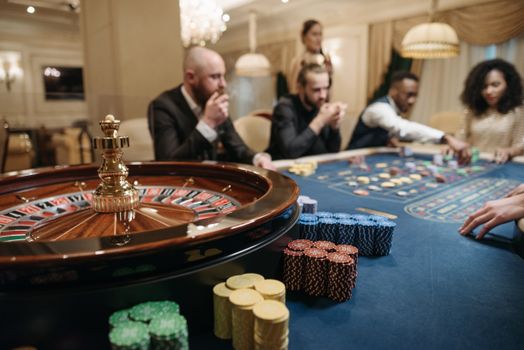
Few casino games evoke the drama and allure of roulette. With its spinning wheel, bouncing white ball, and the tense anticipation of each round, roulette has captured the imagination of gamblers and casual observers for centuries. But how did this iconic game originate, and what transformations has it undergone to become a staple of both luxurious Monte Carlo casinos and online gaming platforms worldwide? Let’s embark on a fascinating exploration of the history and evolution of roulette—a story that spans continents, centuries, and cultures.
The Origins of Roulette: From Philosophical Curiosity to Gambling Sensation
The roots of roulette can be traced back to 18th-century France, but its story is woven from diverse threads of history, mathematics, and even philosophy. The word “roulette” comes from the French term for “little wheel.” Its invention is often attributed to the renowned mathematician and inventor Blaise Pascal, who, in the 1650s, was attempting to construct a perpetual motion machine. While Pascal never achieved his impossible goal, his wheel’s design laid the foundation for what would become the roulette wheel.
Early forms of roulette, or games with similar mechanics, were played in Europe as far back as the 17th century. For example, the Italian game Biribi and the English game Roly-Poly both featured spinning mechanisms and number-based betting. However, it was in Parisian gambling houses in the late 1700s that roulette as we know it began to take shape. The first official reference to a roulette-like wheel dates to 1796 in Paris, where the game quickly gained popularity among both aristocrats and commoners.
By the early 19th century, the game had spread throughout France, evolving in both format and rules. Notably, the earliest wheels featured both a single zero (0) and a double zero (00), elements that would later define the two most prominent variants of roulette.
Roulette Spreads Across Europe and America
Roulette’s popularity quickly transcended French borders, making its way across Europe and eventually to the United States. In Germany, the spa town of Bad Homburg played a pivotal role in shaping the game’s modern form. In 1843, French brothers François and Louis Blanc introduced a revolutionary change: they removed the double zero (00) from the wheel, leaving only a single zero (0). This adjustment reduced the house edge and made the game more attractive to players, especially in competitive European casinos.
By contrast, when roulette arrived in America in the early 19th century, casino operators favored the original double-zero format, arguing that the increased house edge was necessary for profitability. This divergence laid the groundwork for two main variants that still dominate today: European roulette (single zero) and American roulette (double zero).
The American version often included an extra slot for the “American Eagle,” a symbol of liberty, although this quickly fell out of favor due to its high house edge. By the late 1800s, roulette had cemented itself in the glamorous casinos of Monte Carlo and the bustling gambling halls of New Orleans, establishing a firm foothold on both sides of the Atlantic.
Key Differences Between European and American Roulette Wheels
The distinction between European and American roulette is more than just geographical—it has a significant impact on game odds and player strategy. Below is a comparison table highlighting the most critical differences:
| Feature | European Roulette | American Roulette |
|---|---|---|
| Number of Pockets | 37 (0-36) | 38 (0-36 + 00) |
| House Edge | 2.70% | 5.26% |
| Single Zero (0) | Yes | Yes |
| Double Zero (00) | No | Yes |
| Popular Regions | Europe, Rest of World | United States |
This seemingly small difference—a single extra pocket—increases the odds in favor of the house and influences the strategies that players employ. It’s not just a mathematical variance but a testament to how historical and cultural preferences shaped the evolution of the game.
The Golden Age of Roulette: Monte Carlo & the Rise of Glamour
Roulette’s association with luxury and high society was cemented in the 19th and early 20th centuries, particularly in Monte Carlo, Monaco. The Monte Carlo Casino, which opened its doors in 1863, became synonymous with roulette, drawing royalty, celebrities, and wealthy adventurers from across the globe. The casino’s single-zero wheels, introduced by the Blanc brothers, were a major attraction, offering better odds than most European competitors.
Monte Carlo’s glamorous image helped popularize roulette in literature and film, from the novels of Fyodor Dostoevsky—whose own addiction to the game inspired “The Gambler”—to the James Bond franchise, where roulette tables serve as a backdrop for intrigue and suspense.
During this period, roulette’s rules and etiquette became standardized, and the game’s status as the “King of Casino Games” was firmly established. By the early 20th century, roulette was featured in virtually every major casino in Europe and the burgeoning gambling centers of the United States, including Las Vegas and Atlantic City.
Technological Innovations: From Mechanical Marvel to Digital Delight
The 20th century brought about extraordinary changes in how roulette was played and experienced. The advent of electricity allowed for more elaborate and reliable roulette wheels. In 1970, the first automated roulette machines appeared, offering a mechanical alternative to traditional tables and enabling casinos to increase efficiency and reduce labor costs.
Perhaps the most significant transformation occurred with the rise of the internet. The first online casinos were launched in the mid-1990s, with roulette quickly becoming one of the most popular games. According to industry data, by 2023, online roulette accounted for approximately 17% of all online casino game play worldwide.
Online roulette introduced new features such as live dealer streams, customizable betting limits, and innovative side bets. It also made the game accessible to millions who had never set foot in a physical casino. Today, players can enjoy European, American, and even novel variants like Lightning Roulette or Mini Roulette from their computers or smartphones, with high-definition graphics and real-time interactivity.
The digital age has also improved fairness and transparency. Random Number Generators (RNGs) ensure that each spin is unpredictable, while regulatory oversight guarantees that games are not manipulated. This trust is crucial: a 2022 survey found that 76% of online roulette players rated fairness and transparency as their top priorities when choosing a gaming site.
Roulette’s Cultural Impact and Enduring Appeal
Roulette’s influence extends far beyond casino walls. The game has become a metaphor for chance, risk, and fate in popular culture. Phrases like “spinning the wheel” or “betting it all on red” have entered everyday language. Roulette tables feature in countless movies, television shows, and novels, symbolizing both the thrill of potential fortune and the dangers of reckless risk.
Many mathematicians and gamblers have attempted to “beat the wheel,” employing systems like the Martingale, Fibonacci, or the Labouchere. Yet, as the history of roulette demonstrates, the game’s allure lies in its unpredictability and the delicate balance between luck and skill.
Roulette has also inspired social science research into probability, decision-making, and human behavior. A study published in the Journal of Gambling Studies in 2019 found that the psychological anticipation of the spinning wheel triggers reward centers in the brain, contributing to the game’s enduring popularity.
Moreover, roulette has adapted to cultural shifts. From gender-inclusive gaming floors to mobile-friendly platforms, the game continues to evolve, welcoming new generations of players while honoring its rich traditions.
Final Reflections on the History and Evolution of Roulette
Roulette’s journey from a 17th-century inventor’s workshop to the digital screens of today is a remarkable testament to human ingenuity, adaptability, and the timeless appeal of games of chance. Each turn of the wheel carries with it centuries of history, innovation, and cultural significance. From the smoky salons of revolutionary Paris to the neon-lit casinos of Las Vegas and the virtual tables of online platforms, roulette remains a symbol of excitement and possibility.
As technology advances and gaming preferences evolve, one thing is certain: the little wheel will keep spinning, captivating players and spectators alike for generations to come.